








Author: ‘Hamari Baat’ Editorial Team
Whenever a country’s strength is assessed, the discussion tends to focus on its economy, GDP, foreign investment, modern cities, or military prowess. But is this truly the yardstick for a nation’s genuine prosperity? Perhaps not.
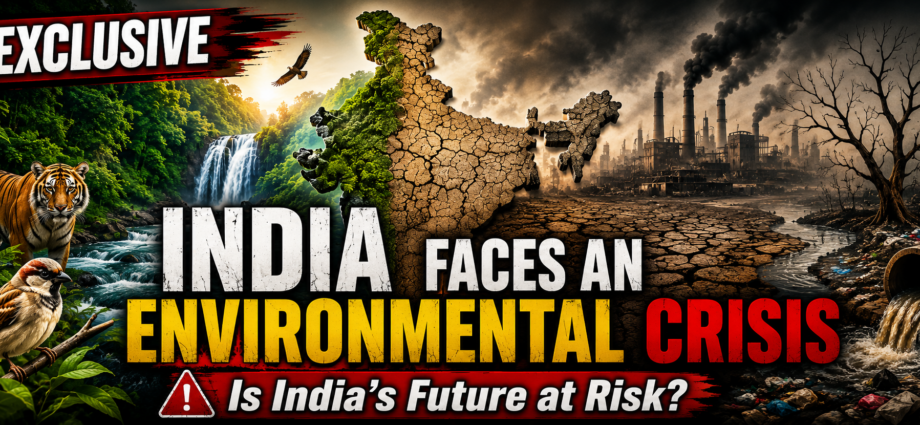
A country’s greatest asset is its natural capital—its forests, rivers, soil, biodiversity, wildlife, and clean environment. This is the foundation upon which agriculture, industry, health, water security, and ultimately the entire economy rest. If this foundation weakens, even the most magnificent model of development cannot endure in the long run.
India stands facing this very challenge today.
The ‘State of India’s Environment 2026’ report presents a grim picture. It indicates that the country’s natural ecosystem is under constant strain due to unplanned urbanization, a growing population, pollution, and poor environmental management. The impact is not limited to forests alone; it is clearly visible in our food, water sources, air quality, and public health.
We often perceive development and the environment as adversaries, whereas the reality is quite the opposite.
If forests remain secure, rivers will thrive.If rivers thrive, agriculture will be secure.If the soil remains healthy, food will be nutritious.If biodiversity is preserved, ecological balance will be maintained.And if this balance is disrupted, it is humanity that will pay the ultimate price.
The Disappearance of the Sparrow: More Than Just a Story About a Bird
Until a few decades ago, mornings in most Indian households began with the chirping of sparrows. Today, that scene is becoming a rarity in many cities and towns.
Mobile towers are often singled out and blamed entirely for this phenomenon. Scientific research indicates that a combination of factors is responsible for the declining sparrow population—rapidly changing urban landscapes, a lack of nesting sites, dwindling food sources, increased pesticide use, shrinking green spaces, and the continuous degradation of local ecosystems.
The sparrow is not merely a bird; it is one of many species that serve as indicators of a healthy environment. When small birds, butterflies, and pollinators begin to disappear from an area, it signals an ecological imbalance.
The solution lies not just in tree plantation, but in ecosystem restoration.
While millions of saplings are planted across the country today, a large number of them perish within a few years. This happens because the approach focuses solely on planting trees without understanding the broader natural ecosystem.
Selecting native species,
Successful conservation entails—
Revitalizing soil quality,
Conserving water,
Creating safe habitats for birds and wildlife,
And ensuring active community participation.
This is the model that can yield long-term results.
The Initiative of Swikriti Wildlife Indian Federation
With this vision, the Swikriti Wildlife Indian Federation (SWIF) is working on a long-term conservation model.
The organization is engaged in projects such as ecologically appropriate tree plantation, native biodiversity conservation, environmental education, and the establishment of ‘Sparrow Habitat Centers.’ The objective goes beyond merely planting trees; it aims to create natural habitats where birds, butterflies, and other local wildlife can safely complete their life cycles.
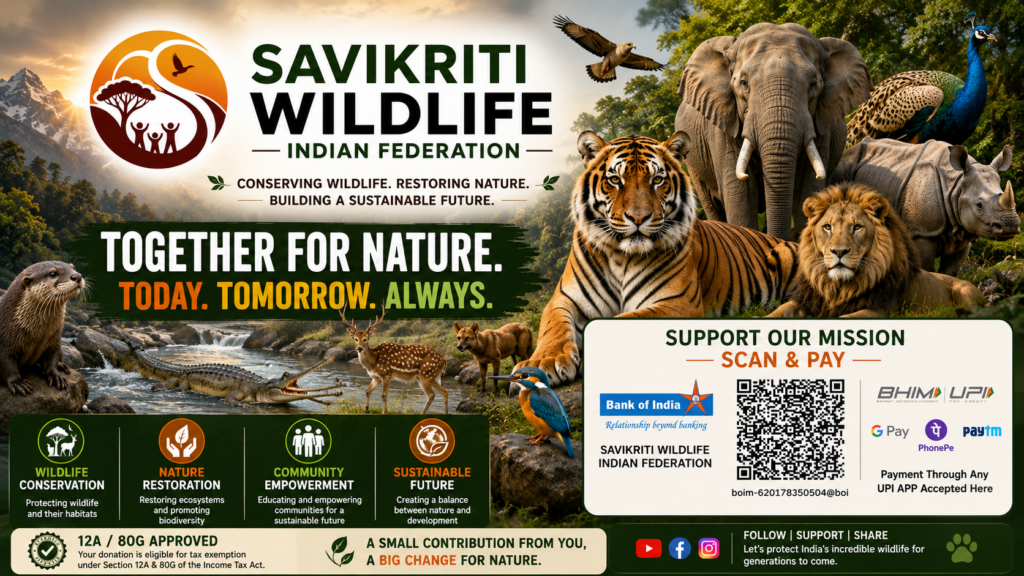
Such projects do more than just conserve the environment; they lay the foundation for clean air, safe water sources, and a healthy ecosystem for future generations.
Conservation is not solely the government’s responsibility. Environmental conservation cannot succeed unless society itself becomes an active participant. If we want our children to see sparrows, butterflies, deer, elephants, and dense forests not just in books but in real life, we must take responsibility today. Volunteering, raising awareness, local tree-planting drives, reducing plastic use, and supporting credible conservation organizations—these small steps can collectively bring about significant change.
Humaari Baat Views on it –
Development is essential, but development that advances by destroying nature ultimately weakens human civilization itself. India’s greatest national asset is its natural heritage. If we do not decide to protect it today, future generations will not forgive us. If you wish to be a part of this transformation, join the conservation campaigns of the Swikriti Wildlife Indian Federation. Your participation—whether through time, expertise, volunteering, or financial support—can play a vital role in securing the future of nature. For only when nature is safe, will India be safe.