




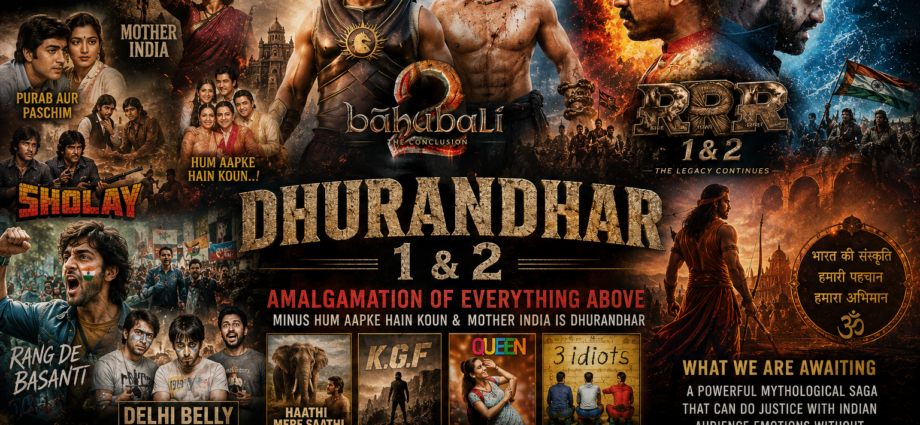
Indian Film Industry has been a definite source of entertainment for Indians even before our Independence. It is always said that visualizing anything makes us understand it in a much easier way than text or even hearing it. So, visual representation in the form of films became a central source of information. Satyavadi Raja Harishchandra in 1917, the first silent film of Indian Cinema, and Alam Ara starring Prithviraj Kapoor in 1931, the first Hindi feature film (Talkies), led the bonafide emergence of Indian Film Cinema. After this, films played a major role in shaping society, and cinema also became a mirror of society. We are listing the ten major films of Indian Cinema that shaped society and impacted the core of the Indian audience.
Mother India — An Essence that Sculpted the Perception of Vintage Indian Motherhood
The year 1957 came after 10 years of Independence. The Britishers had left India, leaving the rule of Zamindars and Lalas over poor villagers. It was affecting Indian farmers and strengthening the dominance of the upper class over the lower class, especially peasants and labourers. Keeping such issues in mind, filmmakers started putting these realities into their films. The content-driven cinema of the old era, along with theatre shows, was the only source of entertainment and awareness for the public.
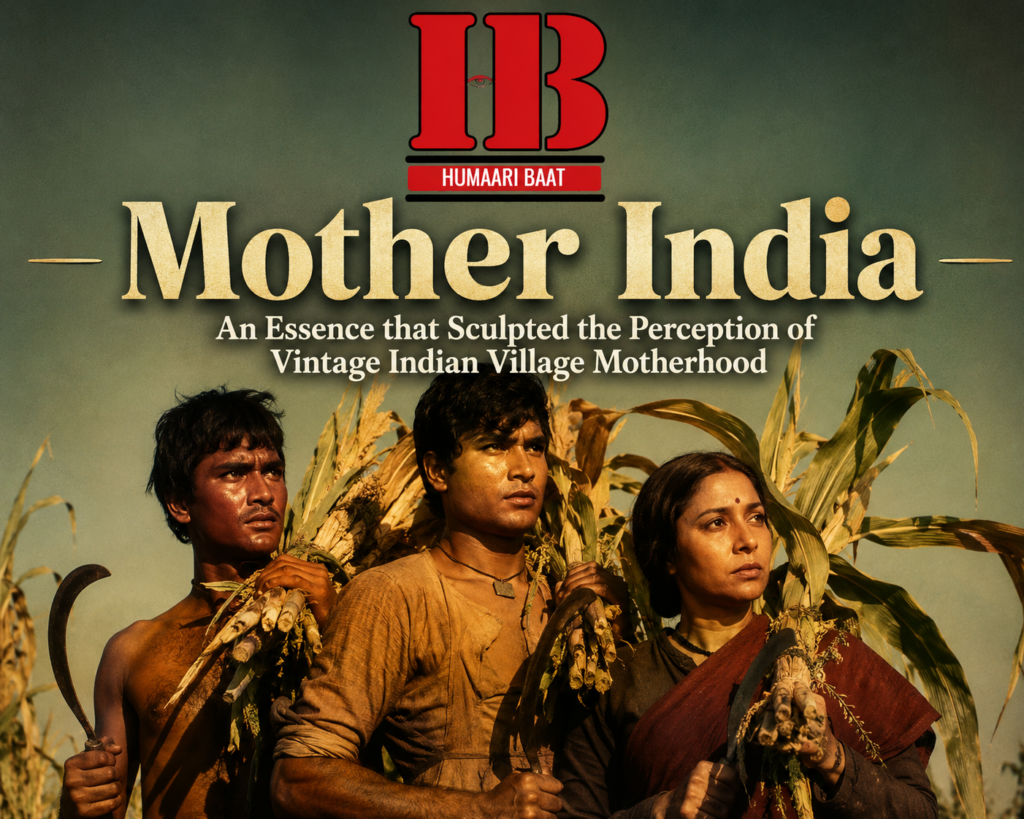
One such iconic film was Mother India starring Nargis Dutt, Raaj Kumar, Sunil Dutt, and Rajendra Kumar in the lead roles. This film not only became an all-time blockbuster but also took Indian cinema to the Oscars. It represented every aspect of village life, even after seven decades. The story of a shrewd moneylender pressurizing a village mother, and her struggle to remain dignified and righteous even after sacrificing her own son, who was using wrongful methods to become rich, took the nation by storm. Grooming and rejuvenating the lives of Indian farmers became one of the central issues of the elections in 1957.
Purab Aur Pachhim – The Pioneer of Patriotic Films in India
We, as true patriots, have always admired films that prolonged the spirit of national interest. One such film that revolutionized nationalism in Indian Cinema was Purab Aur Paschim. Directed by and starring Manoj Kumar, Purab Aur Paschim was released when India was facing a financial deficit. This film became a true motivation behind every youth of that time. “Jab Zero Diya Mere Bharat Ne” became an anthem-like expression that from zero we can become Vishwa Guru.
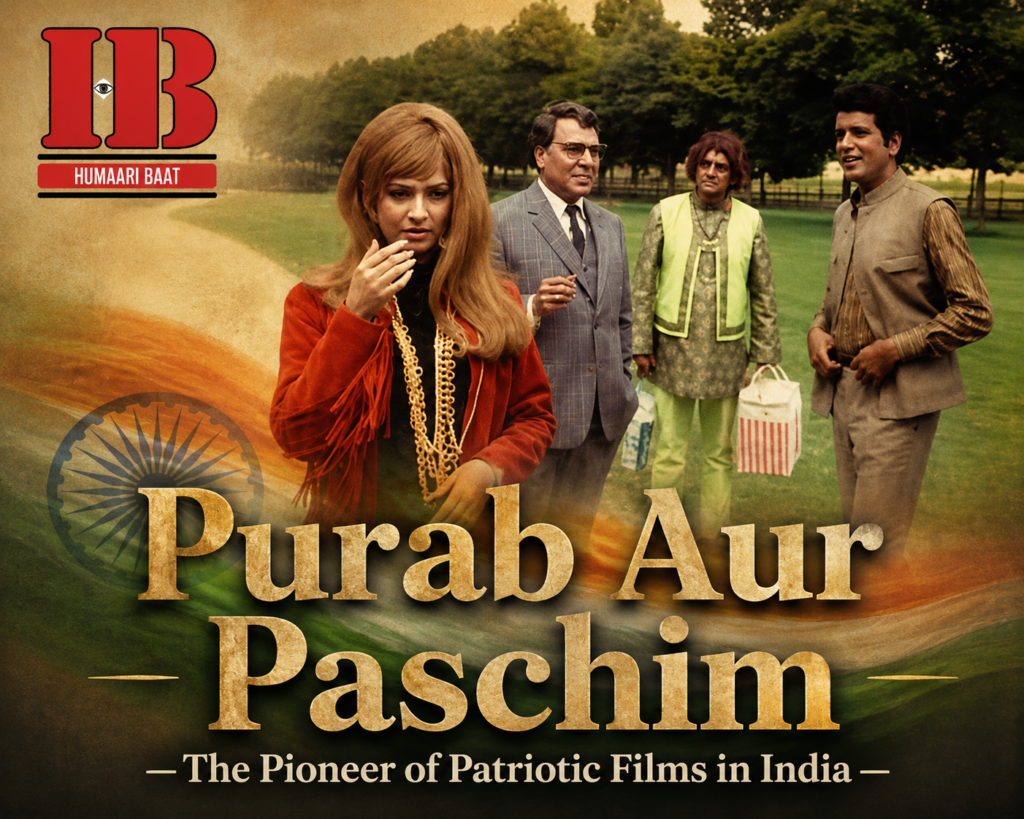
Following the film, every filmmaker was trying to make patriotic films. This film also featured some of the best patriotic songs, along with the iconic “Om Jai Jagdish Hare”, which has now become the bonafide cultural Aarti of every Indian household. Manoj Kumar, even before Purab Aur Paschim, had been praised by former Hon’ble Prime Minister Lal Bahadur Shastri for his song “Jai Jawan Jai Kisan” in his 1967 film Upkar. He is, in the true sense, an inspirational actor and a trailblazing filmmaker.
Sholay — A Top-Class Masala Entertainment Film of All Time
A true portrayal of the rural Indian lifestyle, the film emphasized dacoit terror in rural India. Dacoits and Naxalites became a major problem in India during the 1970s. Gabbar Singh, a vivacious dacoit, was the true personification of the ultimate name of terror in India. He represented the monstrous symbol of dacoits from North to South India. The rising era of crime associated with dacoits became a major problem in the 1970s.

Ramesh Sippy imbibed this issue with impactful and entertaining dialogues. Two top-class robbers who are best friends, “Jai and Veeru,” look heroic in front of the evil Gabbar Singh, who is impossible to capture even by the highly honest and brave Inspector Thakur. Thakur losing every member of his family and even his limbs because of the evil deeds of Gabbar Singh showed how even the Indian Police feared dacoits.
This complete entertainer film had everything — songs, content, comedy, and unity in diversity. This film not only became an all-time blockbuster but also one of the best films in India, providing wholesome entertainment.
Mr India – Exposed the Real Public Issues to Mainstream
A major film of the 1980s which encapsulated issues like food adulteration, bomb blasts in public avenues, and the rising fear of foreign infiltration into Indian society through casinos, the underworld market, and land mafias in commercial cinema was Mr. India. Though the film’s underrated superhero “Mr. India” solved the major problems of India in a supernatural manner, the film revealed the true issues of 1980s India that remained, or even increased, after several decades.
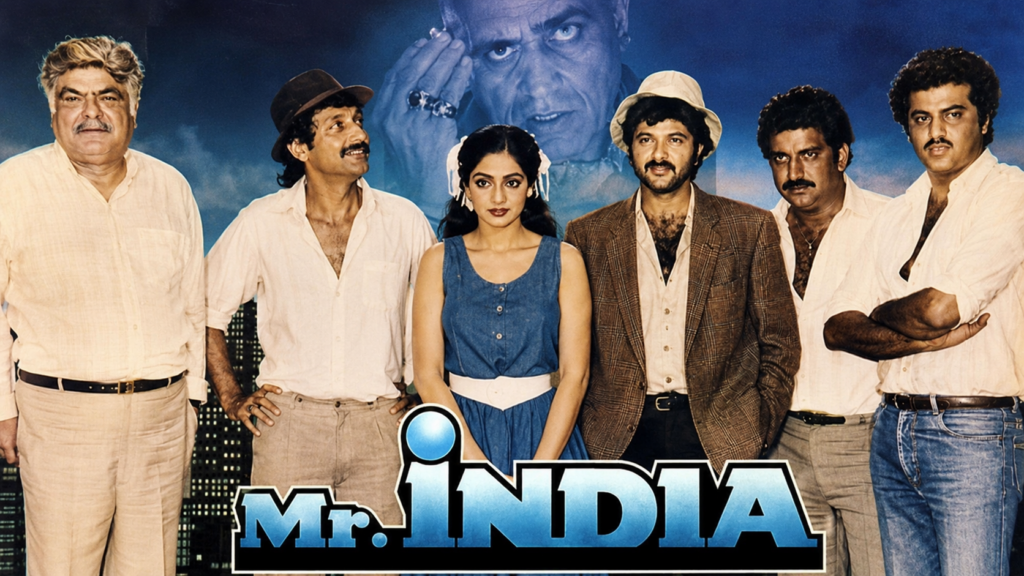
The film became a commercial superhit and revealed the acting excellence of Anil Kapoor and India’s first undisputed female superstar Sridevi. It showed and improvised the role of women in urban India. People were bound to call the movie “Ms. India” because of the exceptional performance of “Hawa Hawai” Sridevi. This film showcased a woman in an independent role who even dared to protect the nation without any superpower.
The irony was that India had witnessed a female Prime Minister five years earlier. On the other hand, the film industry was ruled by another Devi, i.e., Sridevi.
Hum Aapke Hain Koun..! — Spread the Happiness of Indian Culture in Joint Families
After witnessing angry, tragic, and violent cinema for so long, a movie that presented Indian familyhood and cultural celebrations in such a festive way was our very own Hum Aapke Hain Koun..!. When we talk about family, women are centered. That is how the female-centred film HAHK’s soul was “Nisha,” played by the biggest female superstar Madhuri Dixit.
The first film that crossed the 100 crore mark worldwide, it changed single-screen theatres into multiplex culture. The film not only changed the financial matrix of Indian Cinema, but HAHK is also labeled as the first film of the Modern Age and the last film of the Golden Age.
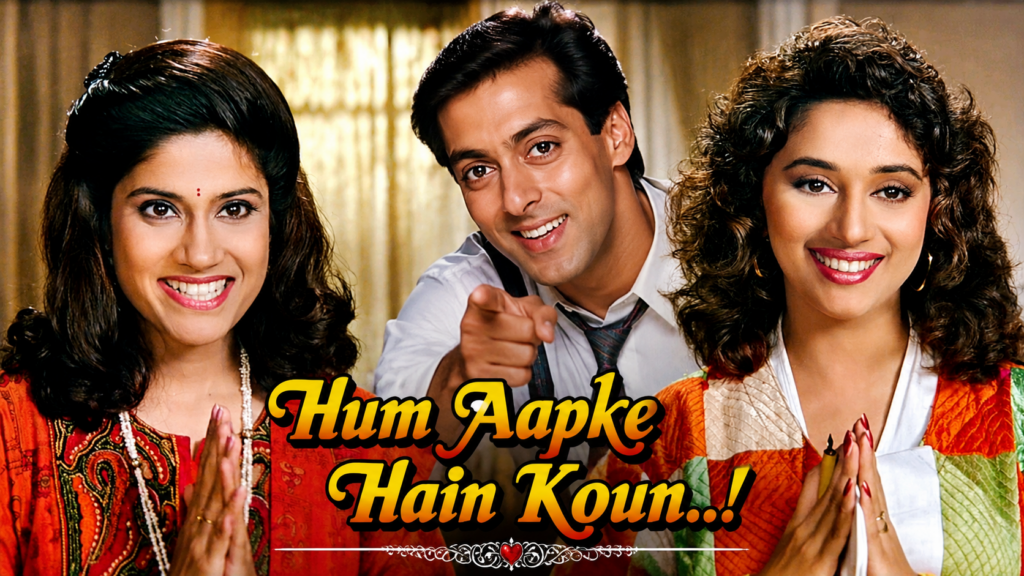
The film revived the marriage culture of India as well as Pakistan. Even the “Joota Churai” rasam became part of almost every Indian marriage. The film also featured Salman Khan in the lead role.
The film, along with Madhuri Dixit, was included in the Guinness Book of World Records because of the presence of 14 songs and her recognition as the highest-earning female superstar of South Asia. Not only the rasams, but even the dresses worn by Madhuri Dixit became a trend among everyone.
Rang De Basanti — A Film on the Youthful Spirit and Patriotism
In the horde of romantic and tapori cinema, one film that made youngsters aspire to be like revolutionary freedom fighters Bhagat Singh, Shivaram Rajguru, Sukhdev Thapar, Ram Prasad Bismil, Ashfaqulla Khan, and Chandra Shekhar Azad was Rang De Basanti. Directed by Rakeysh Omprakash Mehra and written by Rensil D’Silva, this film rejuvenated the spirit of youthfulness and tempted everyone to raise their voice against injustice, even if ministers within the system were involved in such misdeeds.
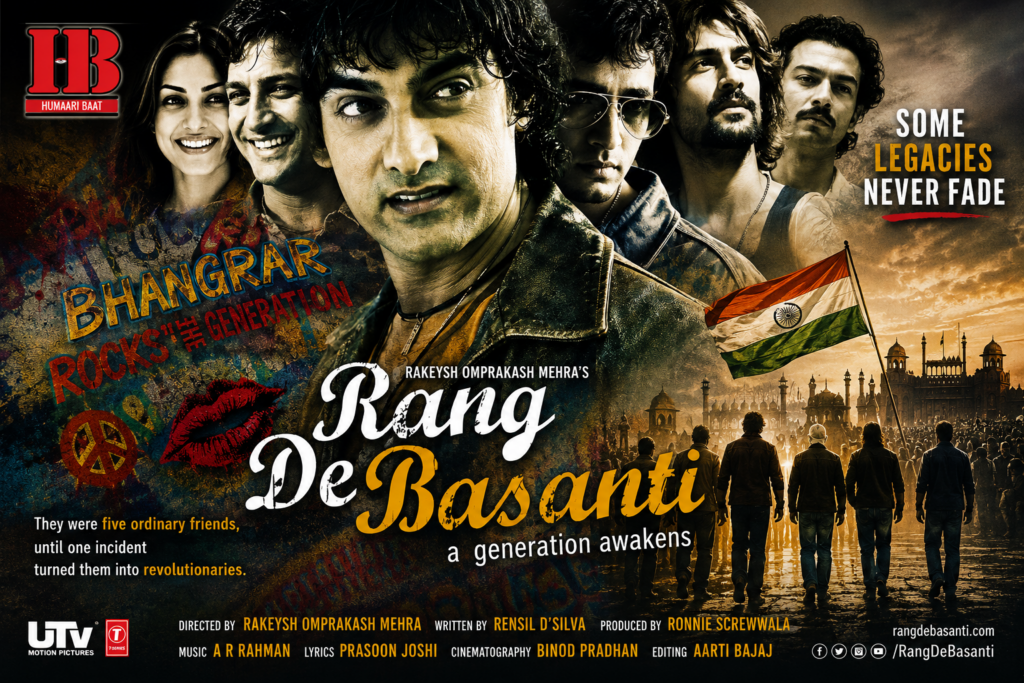
The film’s climax portrayed the five friends as a true representation of the great freedom fighters who stood against injustice for the family of their friend, Flight Lieutenant Ajay Rathod, played by R. Madhavan. They protested against the Government as the authorities blamed Fighter Pilot Ajay Rathod for the MiG aircraft crash instead of the corrupt politician and Defence Minister V. K. Shastri.
This film deeply resonated with the youth. It was after this film that many youngsters started admiring revolutionary freedom fighters like Bhagat Singh, Shivaram Rajguru, Sukhdev Thapar, and Chandra Shekhar Azad.
Delhi Belly — The Film That Commercialized Vulgar Urban Culture in Bollywood
After the success of Delhi Belly, Bollywood witnessed a sudden rise in films that normalized abusive language, sexual appeal, immoral lifestyles, substance abuse, and vulgar comedy in the name of modern youth entertainment. The film opened the gates for a completely different style of urban cinema where being offensive, rebellious, sexually aggressive, and culturally disconnected was presented as “cool” and “progressive.”
Films like Gully Boy, Lust Stories, Veere Di Wedding, Kabir Singh, Grand Masti, Masti, Kyaa Kool Hai Hum, and several adult comedies started dominating urban entertainment culture. Many viewers believed that such films slowly weakened the emotional depth, family values, and cultural dignity that Indian Cinema was once known for.

The excessive use of abusive slang, sexual references, intoxication, hookup culture, and morally confused characters started becoming normal among youngsters through mainstream entertainment. Cinema that once inspired society through patriotism, sacrifice, familyhood, and emotional storytelling gradually shifted towards shock value, explicit humour, and sensationalism.
Many critics and traditional cinema lovers believed that this phase of Bollywood created confusion among youth by glamorizing aggression, casual relationships, disrespectful behaviour, and vulgarity as symbols of confidence and modernity. The rise of such films also changed audience psychology, where controversial and explicit content started receiving more attention than meaningful storytelling and socially responsible cinema.
Baahubali: The Beginning and Baahubali 2: The Conclusion — The Return of Hindu Culture in Indian Cinema
Bollywood, which had shifted towards westernization, vulgarity, drugs, sexualization, and left-oriented cinema, started facing immense competition from South Indian Cinema. The cultural showcase in South Indian films directly connected with North Indian nationalist and Hindu audiences. With the rise of Hindutva and cultural nationalism across the nation after 2014, audiences gradually started rejecting films that they believed were disconnected from Hindu roots, traditions, and civilizational values.
Then came Baahubali: The Beginning. Baahubali gave audiences what they had been demanding from Bollywood for a long time — grand Hindu civilizational storytelling, devotion, sacrifice, warrior ethics, kingdom culture, and pride in ancient Indian heritage.
Many Mughal-themed, over-westernized, and politically left-oriented films started facing rejection from audiences, while Baahubali: The Beginning and Baahubali 2: The Conclusion showcased the grandeur of Hindu kingdoms and the devotion of rulers towards Dharma and Hindu traditions. The portrayal of Rajmata Shivagami, Kattappa, Amarendra Baahubali, and Mahendra Baahubali created unmatched hype and transformed the standards of Indian filmmaking.
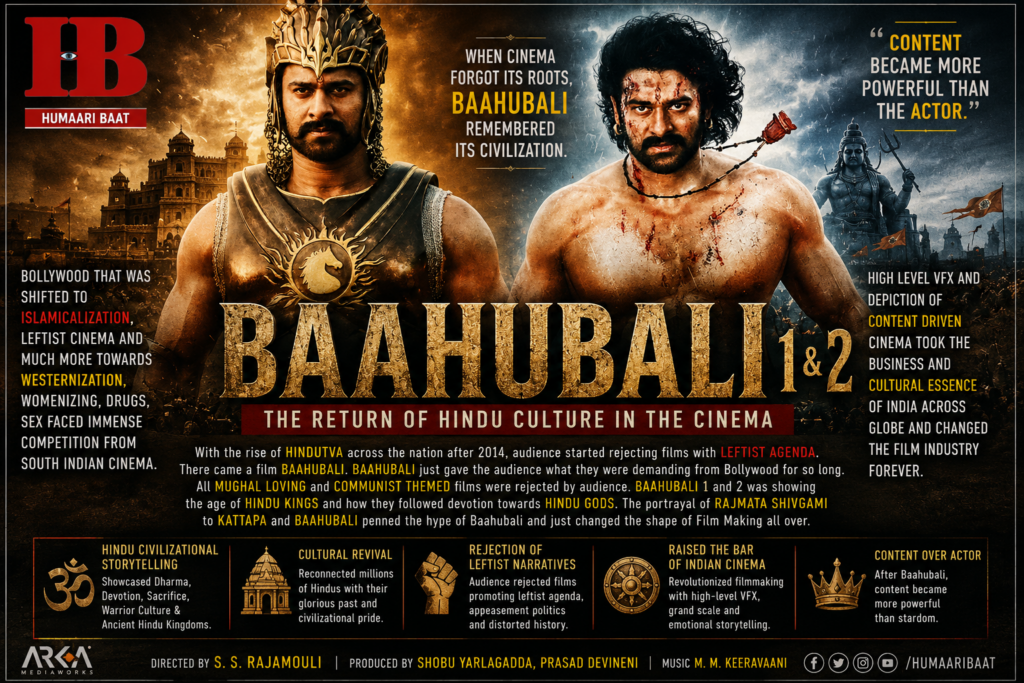
Directed by S. S. Rajamouli, the films revolutionized Indian Cinema through high-level VFX, large-scale storytelling, emotional depth, and content-driven filmmaking. The films took the cultural essence of India across the globe and completely changed the structure of the Indian film industry.
After Baahubali, content became more powerful than actors, and pan-India cinema became the future of Indian filmmaking.
RRR — The Legacy of Baahubali: The Beginning Continued in a More Practical and Revolutionary Way
After the historic success of Baahubali: The Beginning and Baahubali 2: The Conclusion, Indian Cinema witnessed the rise of a new era of cultural and civilizational storytelling. The legacy of Baahubali continued through RRR, but in a more practical, emotional, and revolutionary manner.
Directed by S. S. Rajamouli, RRR transformed the image of Indian heroes into symbols of sacrifice, brotherhood, resistance, and devotion towards the motherland. Inspired by revolutionary freedom fighters Alluri Sitarama Raju and Komaram Bheem, the film blended action, emotion, mythology-like heroism, and cultural pride on a global cinematic scale.
Unlike many urbanized and westernized films, RRR reconnected audiences with rooted Indian storytelling, traditional emotions, brotherhood, sacrifice, Sanatani symbolism, and pride in Indian heritage. The massive success of the film proved that audiences across the globe were eager to witness culturally rooted Indian stories rather than identity-confused urban cinema.

The success of RRR also strengthened the rise of culturally driven films like Kantara, where Indian traditions, folklore, devotion, and spiritual roots became central elements of storytelling. This wave inspired filmmakers to proudly showcase local cultures, Hindu traditions, village legends, temple traditions, and civilizational pride without hesitation.
Most importantly, RRR carried forward the legacy of Baahubali by proving once again that content rooted in Indian culture, emotion, Dharma, and larger-than-life storytelling could dominate world cinema beyond language barriers.
Dhurandhar 1 and 2 — The Amalgamation of Revolutionary Indian Cinema
If one combines the patriotism of Purab Aur Paschim, the mass entertainment of Sholay, the youthful revolutionary spirit of Rang De Basanti, the cultural pride of Baahubali: The Beginning and RRR, and the emotionally charged nationalism of content-driven Indian Cinema, then the final outcome can be called Dhurandhar. Minus the family celebration of Hum Aapke Hain Koun..! and the village motherhood essence of Mother India, Dhurandhar stands as the amalgamation of almost every powerful cinematic emotion that shaped modern Indian audience psychology.
The film represents action, nationalism, sacrifice, rebellion, devotion, cultural pride, emotional storytelling, and larger-than-life heroism in one grand cinematic universe. It carries the soul of revolutionary cinema while also presenting the visual grandeur and modern filmmaking standards of contemporary Indian Cinema.
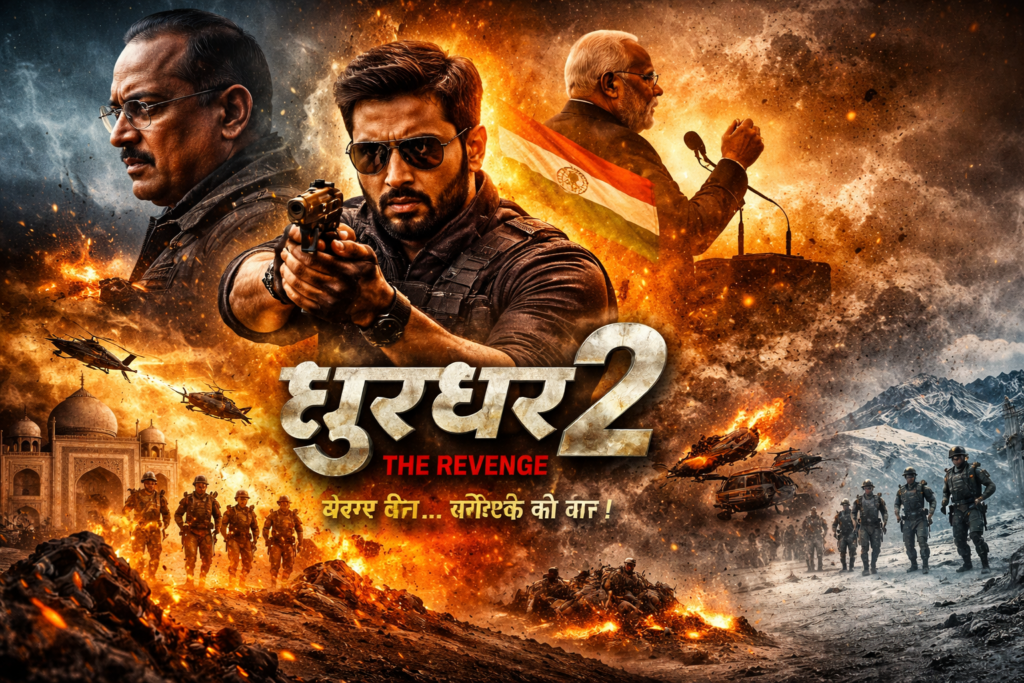
Dhurandhar symbolizes the transformation of Indian audience taste, where viewers no longer demand only stars, romance, or urban glamour, but seek emotionally powerful stories rooted in Bharat, civilization, heroism, and identity. It is the reflection of an era where content, culture, and cinematic scale merged together to redefine mainstream Indian entertainment.
What We Are Awaiting — The Future of Indian Cinema
After witnessing decades of revolutionary films that shaped Indian society, culture, patriotism, familyhood, rebellion, urbanization, and civilizational pride, Indian audiences today are awaiting a powerful mythological and cultural saga that can emotionally unite the nation without hurting the sentiments of any community.
Special Mentions
- Haathi Mere Saathi — Emotional bond between humans and animals
- K.G.F: Chapter 1 and K.G.F: Chapter 2 — Rise of mass elevation cinema and larger-than-life heroism
- Queen — Female independence and self-discovery
- 3 Idiots — Educational pressure and youth aspirations